Self Storage with Pickup and Delivery in Dubai: Costs, Areas and Process
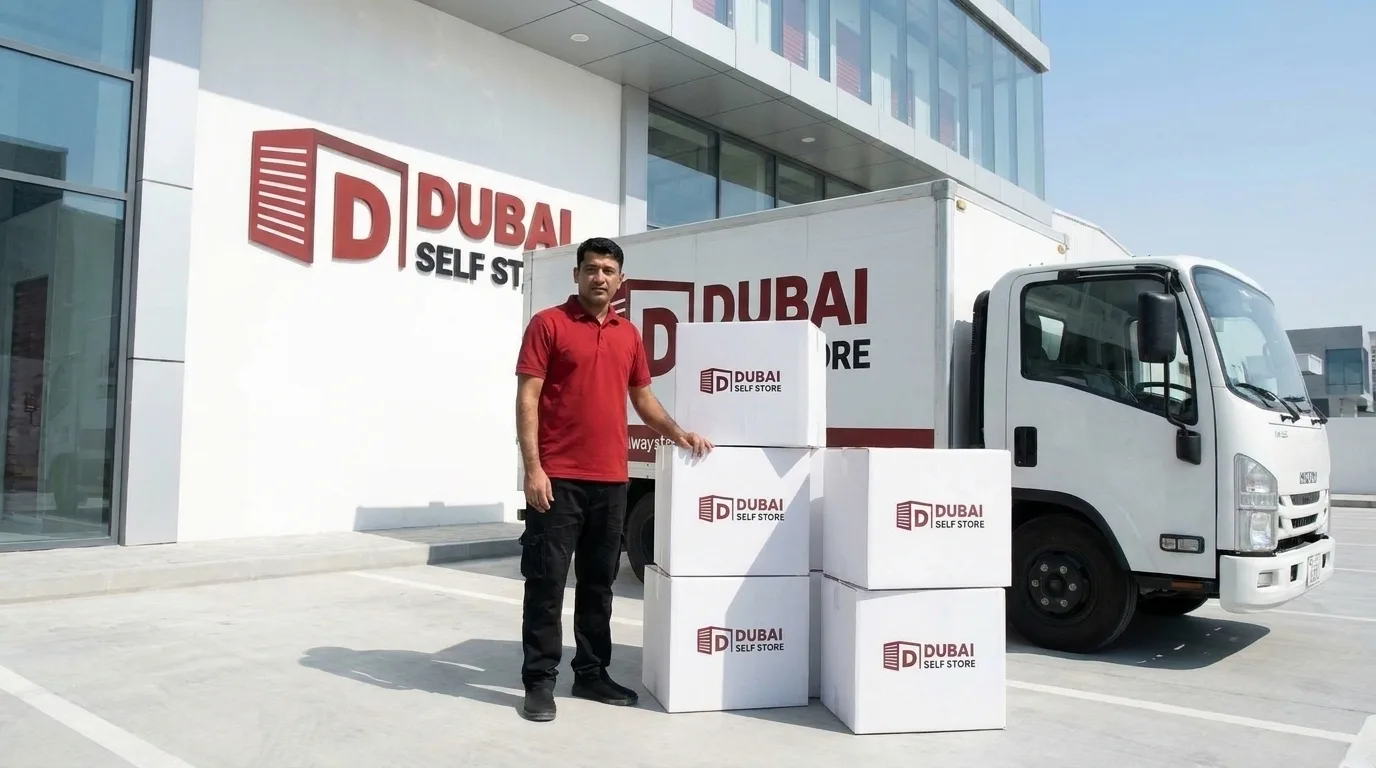
Self storage with pickup and delivery in Dubai starts from around AED 150 per month for small storage options, and suits people who want their belongings collected from home or work, stored securely, and returned when needed without making repeated trips to a storage facility. It is particularly useful for people moving homes, renovating, travelling, downsizing, or storing bulky furniture and boxes.
The biggest difference between ordinary self storage Dubai and a pickup-and-delivery service is simple: you do not have to handle every part of the move yourself. The storage provider can collect your belongings, transport them to the facility, keep them for the agreed period, and arrange their return when you request delivery.
That can save more than just effort. If your storage facility is across Dubai, every personal trip means fuel, traffic, loading, unloading and time. For large or heavy belongings, pickup and delivery can make the whole storage arrangement much easier.
What pickup-and-delivery storage means
Pickup-and-delivery storage follows a straightforward process:
Collect → Transport → Store → Return
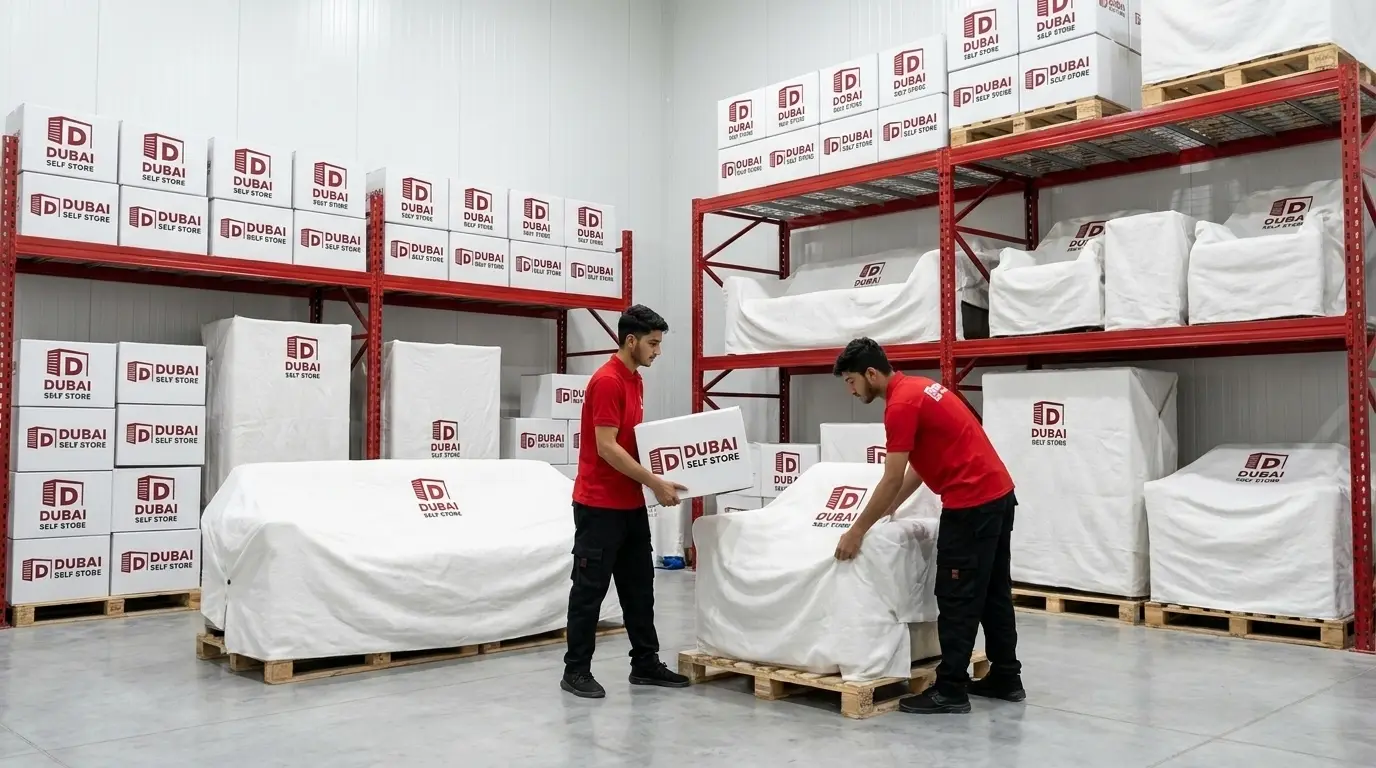
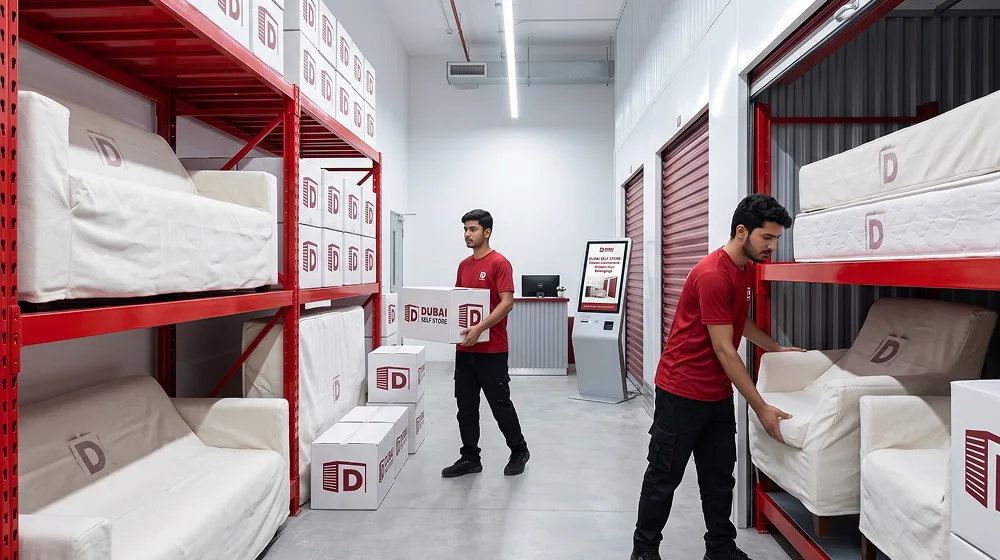
First, you tell the provider what you want to store and where it needs to be collected. This could be a few boxes from an apartment, furniture from an office, luggage from a temporary home, or household belongings from a property between tenancies. The provider then confirms the storage space required and arranges collection. Depending on the service, the team may load the belongings, transport them to the storage facility and place them into the allocated storage area.
Your belongings remain in storage for the agreed period. When you need them back, you request a return delivery and arrange a suitable date and location. This model is particularly useful when you do not need regular physical access to individual items. If you need to open your storage unit every weekend, traditional self-access storage may be more suitable. If you want your belongings safely stored for three or six months and only need them back later, pickup-and-delivery storage can save considerable hassle.
Which Dubai areas do we cover?
Dubai Self Store provides pickup and drop-off services across Dubai, Ajman and Ras Al Khaimah, according to its current website. Within Dubai, service coverage can include central, residential and outer areas, with pickup arranged from the customer’s location rather than requiring the storage facility to be inside every neighbourhood. For Dubai customers, this means areas such as Dubai Marina, Downtown, Business Bay, Jumeirah, Al Barsha, Dubai Hills Estate, JVC, Al Quoz and surrounding communities can be considered for pickup, subject to availability and the exact collection address.
This distinction matters. A service area is not necessarily a facility location. You may live in Business Bay while your stored belongings are kept at a storage facility elsewhere in Dubai. The practical benefit is that you do not have to choose storage based only on the nearest building. You can compare the storage size, price, security, conditions and transport service together.
| Area type | Example locations | Pickup and delivery benefit |
|---|---|---|
| Central Dubai | Downtown, Business Bay | Avoid repeated trips through busy areas |
| Coastal areas | Dubai Marina, Jumeirah | Useful for furniture and apartment moves |
| Residential communities | JVC, Dubai Hills, Al Barsha | Convenient for household storage |
| Business areas | Al Quoz, Business Bay and nearby districts | Useful for stock, documents and equipment |
| Outer Dubai | Areas farther from central facilities | Pickup reduces travel burden |
Availability can vary by address, item volume, vehicle requirements and scheduling, so the collection address should always be confirmed when requesting a quote.
Pickup-only, delivery-only and both-way options
You do not necessarily need the same transport arrangement for every storage situation. Pickup-only storage works when you need help moving belongings into storage but plan to collect them yourself later. This can be useful if you have access to a suitable vehicle and expect to visit the facility. Delivery-only storage is useful when your belongings are already stored but you need them transported to your home, office or another address. Two-way pickup and delivery is the most convenient option for many long-term storage customers. The provider collects the belongings at the beginning and returns them when you are ready.
For example, imagine you are renovating a two-bedroom apartment. Instead of moving furniture into a friend’s garage, renting a van and making several trips to storage, you can arrange collection, have the items stored during the renovation and request delivery once the work is finished. That is where managed storage starts to make practical sense.
Vehicle types and loading requirements
The vehicle used for collection depends on the quantity, dimensions and weight of your belongings. A few boxes and suitcases may require much less space than a complete household containing sofas, wardrobes, appliances and dining furniture. Giving the storage provider an accurate description helps them assign the appropriate vehicle and loading arrangement.
Before collection, provide details such as:
- Approximate number of boxes
- Number and size of furniture pieces
- Large appliances
- Fragile or unusually shaped items
- Approximate total volume
- Number of floors
- Lift availability
- Parking or loading access
- Any narrow entrances, stairs or other restrictions
This information matters because the storage team needs enough space and the right equipment to handle the collection safely. If a property has no lift, for example, the loading time may be longer and additional labour may be required. Likewise, a building with restricted loading hours may require the collection to be scheduled within a specific window. Dubai also has rules governing certain vehicle and road-use situations. The RTA publishes permit requirements for specific heavy vehicles and restricted routes, so transport arrangements involving larger vehicles may require additional planning.
How pickup pricing is calculated
Pickup pricing is not necessarily a flat amount for every customer. The final transport cost can depend on several practical factors. The first is distance. A collection within central Dubai may have a different transport cost from one at the other end of the emirate. The second is volume. Ten boxes are easier to transport than a full apartment of furniture, and a larger load may require a larger vehicle or additional trips. The third is floor and lift access. A ground-floor villa with easy loading is very different from a high-rise apartment where furniture must be moved through a lift or stairs.
Other factors may include:
- Number of workers required
- Loading and unloading time
- Furniture dismantling
- Furniture reassembly
- Packing requirements
- Weekend or after-hours collection
- Special handling
- Additional delivery trips
This is why a very cheap transport quote can become expensive after the details are added. Ask for the complete collection and delivery cost, rather than only the basic transport charge. Your storage price is also separate from the transport cost unless the provider specifically says pickup and delivery are included in the package.
Packing requirements before collection

Proper packing makes collection easier and reduces the chance of avoidable damage. Boxes should be strong enough for their contents and should not be overloaded. Heavy items should generally go into smaller boxes so that they can be lifted safely, while lighter belongings can go into larger boxes. Furniture should be cleaned before storage and, where appropriate, wrapped or protected. Glass, mirrors and other fragile pieces need suitable protective material rather than being left exposed.
Appliances also need preparation. Refrigerators and freezers should be emptied, cleaned and completely dried before storage. Washing machines should be drained according to the manufacturer’s instructions. Documents, jewellery, cash, passports, medication and other irreplaceable personal items should not be placed into ordinary storage unless the provider has specifically confirmed that the service is appropriate. The aim is simple: make every item easier to identify, carry and store before the collection team arrives.
Same-day vs scheduled collection
Same-day pickup can be convenient when you are dealing with an urgent move, tenancy deadline or unexpected space problem. However, scheduled collection is usually easier to plan when you are storing a larger quantity of belongings. A scheduled collection gives you time to pack, label boxes, dismantle furniture where necessary and make sure building access is available. If you need same-day service, confirm availability before assuming it is guaranteed. The provider may need to check vehicle availability, crew capacity, distance and the size of the collection. For planned moves, booking ahead is usually the safer option. It also gives you more control over the collection window and reduces the chance of rushing through the packing process.
How access and return requests work after storage
Pickup-and-delivery storage is different from traditional self-access storage because you may not simply walk into a unit and take one item whenever you want. Instead, you generally request the return of your belongings and arrange a delivery time. The provider then retrieves the stored items and transports them to your nominated address.
This works particularly well for belongings that you will not need frequently. Furniture during a renovation, seasonal household items or archived business materials can remain untouched until you actually need them. If you expect to need individual boxes regularly, ask how retrieval works before booking. You should know whether partial retrieval is available, how much notice is required and whether a delivery charge applies. The more frequently you need access, the more important the access model becomes.
Who is responsible for damage in transit?
Storage and transport are two related but separate parts of the service, so it is important to understand where responsibility sits. Ask the provider what their liability covers during collection, loading, transportation, unloading and storage. You should also ask whether your belongings need separate insurance or contents cover. Do not assume that because a company collects an item, every type of accidental damage is automatically covered.
Before collection, photograph valuable or delicate belongings and keep a record of their condition. For furniture, appliances and electronics, this can provide useful evidence of their condition before transportation. The storage agreement should also explain exclusions, declared values, claims procedures and any limitations on liability. For high-value belongings, ask for the insurance or liability terms in writing before handing them over.
How to book a collection
Booking starts with a simple description of what you need stored.
Tell the provider:
- What you are storing: boxes, furniture, luggage, appliances, documents or business stock.
- How much you have: approximate number of boxes and larger items.
- Where it is located: building, area and floor.
- Access conditions: lift, stairs, parking and loading restrictions.
- When you need collection: preferred date and time.
- How long you expect to store everything: one month, six months or longer.
- Where you want it returned: your home, office or another approved address.
The provider can then estimate the storage space and transport requirements. If you are unsure about the exact unit size, that is fine. A rough inventory is usually more useful than guessing a storage size and discovering later that it is too small. For a better estimate, you can also compare the storage unit sizes in Dubai before requesting your quote. This gives you a starting point for understanding whether your belongings are likely to need a compact locker, medium unit or larger storage space. You can then compare the storage rate with the transport charges rather than looking at either cost in isolation.
Get a quote for pickup-and-delivery storage
Pickup-and-delivery storage is ultimately about removing one of the biggest inconveniences of self storage: having to move everything yourself. You can arrange for your belongings to be collected, transported to storage, kept for the agreed period and returned when you need them. That makes the service particularly useful for moves, renovations, travel, downsizing and business storage. Before booking, compare the complete cost rather than focusing only on the monthly storage rate. Ask about unit size, pickup charges, delivery charges, loading, packing, access, insurance and any additional fees. For a current estimate, get a quote based on your collection address, belongings, storage duration and return requirements. That gives you a much more realistic picture of what your door-to-door storage will cost.